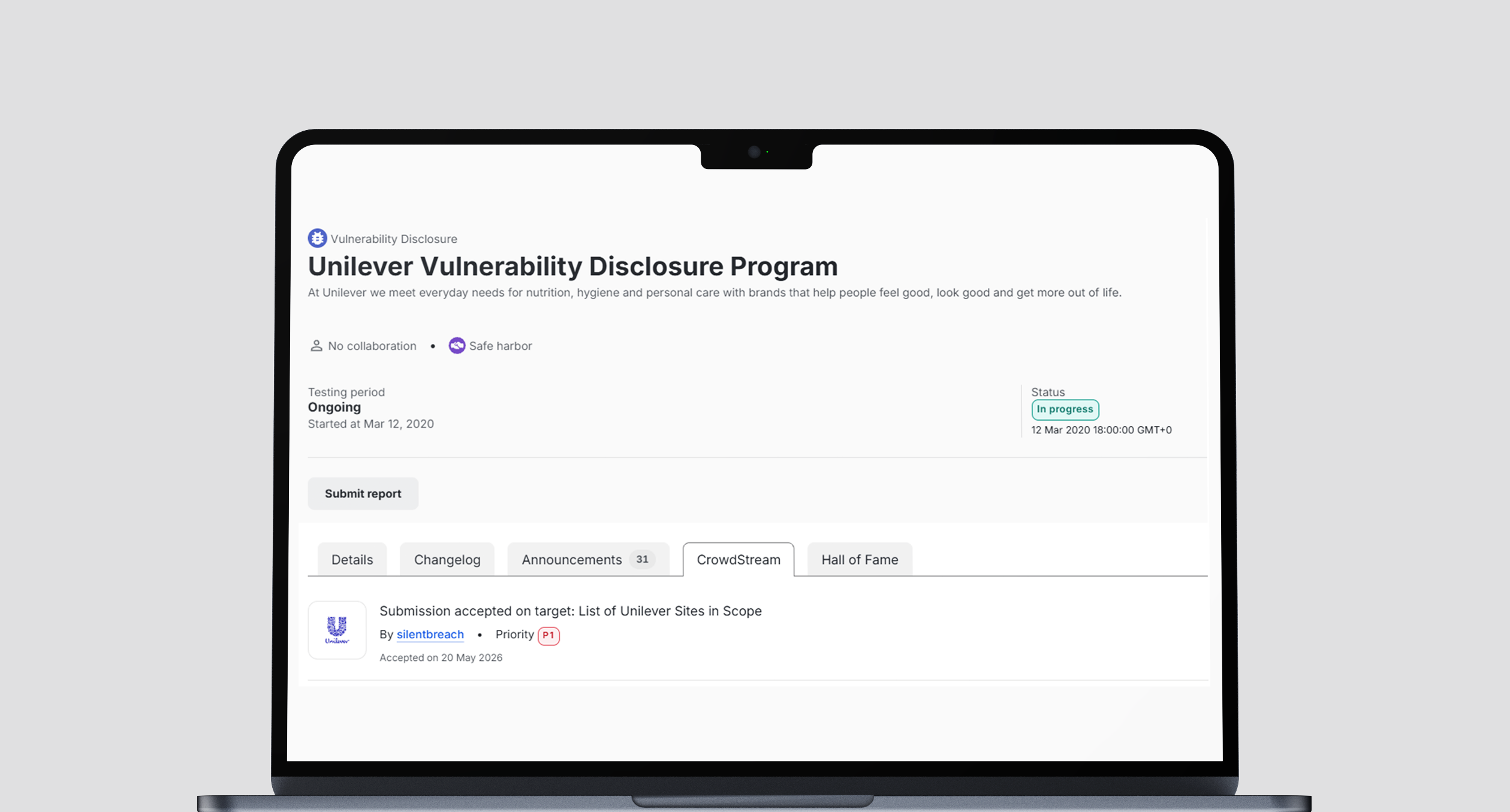
Enterprise security programs are increasingly metric driven. Dashboards report vulnerability remediation timelines, patch compliance percentages, endpoint coverage, privileged access controls, and a range of operational indicators. These metrics create structure, accountability, and defensible evidence that security activities are taking place. In regulated environments, they are often necessary.
The problem is not that these metrics are wrong. The problem is that they primarily measure operational performance rather than adversary resistance. They show how efficiently controls are managed, not how effectively the environment constrains a capable attacker. A program can be operationally disciplined and still architecturally fragile.
Modern intrusions often avoid noisy exploitation paths. Instead of exploiting unpatched internet facing services, attackers increasingly abuse identity systems, delegated permissions, federation trust, and legitimate APIs. In adversary simulation work conducted by Silent Breach, we frequently encounter environments that demonstrate strong remediation discipline and complete endpoint coverage, yet allow privilege escalation through identity trust chains in fewer steps than expected. This gap between operational metrics and architectural reality is where resilience should be measured.
The Structural Blind Spot
Mean Time to Close Vulnerability Tickets
Mean time to close vulnerability tickets is widely reported because it reflects process maturity and shows that findings are tracked, prioritized, and resolved within defined service levels, making backlog reduction a significant achievement in many organizations. However, ticket closure velocity does not necessarily reduce meaningful attack paths — a team may close ninety-five percent of critical vulnerabilities within fourteen days while a production server hosting an internal identity service remains reachable from broad network segments and relies on shared local administrator accounts.
Vulnerability scanners do not fully capture identity misconfigurations, excessive group memberships, or overly permissive role assignments, so these structural weaknesses rarely appear as high-severity tickets, allowing strong remediation metrics to coexist with identity trust chains that permit escalation to administrative roles in a small number of hops. Ticket velocity measures workflow efficiency, not structural containment.
Patch Compliance Percentage
Patch compliance percentages are another common indicator of maturity. Reporting that ninety-eight percent of systems are patched within SLA suggests disciplined configuration management and reduced exposure to known exploits. In homogeneous on-premises environments, this can materially reduce risk.
The limitation is that compliance aggregates systems without weighting their privilege concentration or exposure context. An organization may maintain near-perfect patch compliance while a cloud identity broker has overly permissive role assignments that allow any authenticated user to assume a role granting read access to sensitive storage resources. Every server is patched, but the authorization model allows excessive access. The compliance percentage obscures the architectural risk. Patch metrics also fail to address non-host-based exposure in cloud environments. Service principals, IAM policies, OAuth applications, and federation trust relationships are not remediated through operating system updates. A fully compliant patch posture does not mitigate role chaining paths that allow a compromised developer account to reach subscription owner or global administrator through nested group membership. Compliance improves hygiene, but it does not measure privilege topology.
Endpoint Detection Coverage
Reporting one hundred percent endpoint detection coverage demonstrates control deployment completeness. Achieving full agent coverage across workstations and servers is operationally demanding and valuable. It reduces blind spots in process execution and file activity telemetry.
Yet endpoint presence does not equate to comprehensive detection capability. Consider an attacker who compromises a developer account and uses legitimate cloud command-line tools to enumerate resources and modify IAM policies. No malware is deployed. No suspicious binaries are written to disk. All actions occur through authenticated API calls using valid credentials. Endpoint agents remain healthy, and coverage remains complete, while privilege escalation proceeds through sanctioned interfaces. In SaaS environments, compromise can occur entirely within the application control plane. An attacker who replays a refresh token may create forwarding rules, generate API keys, or grant delegated permissions without triggering meaningful endpoint activity. Endpoint coverage metrics confirm deployment, but they do not measure whether identity and API-level abuse is visible or constrained.
Shifting Toward Resilience-Oriented Metrics
Across the above metrics, a pattern emerges. They measure control deployment, remediation timeliness, and surface hygiene. They are necessary components of a mature program, but they do not answer a central question: how difficult is it for an attacker to persist and escalate once inside?
Modern enterprise environments are identity centric. Authorization decisions, delegated permissions, and trust relationships define the effective control plane. If those layers are loosely governed, attackers can operate within legitimate pathways while traditional metrics continue to look strong. An environment can be fully patched, fully instrumented at the endpoint level, and still permit excessive privilege propagation through identity design.
Shifting toward resilience oriented metrics requires measuring containment capability and architectural friction. These metrics are more complex, but they are measurable with structured validation and configuration analysis.
Identity Containment Time
A more meaningful metric is the time required to contain a compromised identity. This can be measured through controlled internal simulations. A security engineering team creates a test OAuth application with delegated permissions in a monitored tenant. The timer begins when the grant is created. It stops when detection occurs and the associated permissions and tokens are revoked. The same approach can be applied to service principal abuse, cross-account role assumption, or unauthorized role assignment. By periodically running these exercises, organizations can measure the interval between high-risk identity change and effective containment.
In controlled exercises conducted by Silent Breach, identity containment time often varies significantly between organizations with similar tool stacks. The differentiator is rarely technology alone. It is clarity of response ownership, quality of control plane visibility, and predefined revocation workflows. Identity containment time directly affects adversary dwell time. If revoking a malicious token requires hours of coordination across teams, attackers benefit from that delay. Measuring and reducing this interval improves practical resilience in a way that patch velocity alone cannot.
Privilege Escalation Detection Coverage
Privilege escalation detection coverage evaluates whether critical control plane changes are observable. This can be operationalized by enumerating high-risk events such as IAM policy updates, Azure AD role assignments, federation trust modifications, and API permission expansions. Each event type can be mapped to logging sources, SIEM ingestion, and detection rules. Coverage can then be expressed as the percentage of high-risk privilege-modifying actions that generate structured alerts or investigations. If role assignment changes occur without triggering review, that gap becomes visible. If assume-role events across accounts are logged but never analyzed, that gap can be documented and addressed.
This metric does not rely on alert volume. Instead, it evaluates whether specific escalation pathways are instrumented. By tracking coverage improvements over time, organizations can demonstrate reduced blind spots in the areas most relevant to privilege abuse.
Lateral Movement Reachability
Lateral movement reachability can be measured through identity graph analysis. Most enterprise identity systems expose relationships between users, groups, roles, and resources. By selecting a baseline user account and enumerating direct and indirect permissions, teams can model how many privileged roles or sensitive systems are reachable within a defined number of trust hops.
During architecture reviews and red team engagements, Silent Breach models these identity graphs to identify unintended trust chains. In multiple cases, a standard user identity was able to reach production administrative roles through nested group membership and transitive role assignments without exploiting a single software vulnerability. These conditions are invisible to patch and remediation metrics but highly relevant to breach impact. This analysis does not require advanced tooling, although graph-based security tools can automate it. Even manual modeling for high-value identity types can reveal excessive implicit trust. Tracking reductions in reachable privileged nodes over time provides a measurable indicator of architectural hardening.
Control Plane Logging Completeness
Control plane logging completeness can be assessed by comparing required high-risk event categories against what is actually logged and centrally analyzed. Cloud providers publish documentation listing event types related to identity and policy changes. Organizations can inventory which of these are enabled, retained, and ingested into monitoring systems.
Completeness also requires validating that logs are actionable. If assume-role events, policy updates, and token issuance records are collected but not correlated with detection logic, visibility remains partial. A practical measurement approach involves selecting a sample of high-risk configuration changes and verifying that they produce searchable, alertable records in the SIEM. By regularly validating logging and detection pipelines for identity-related events, organizations ensure that control plane activity is not operating outside monitoring boundaries. This metric evaluates both configuration and operational integration.
Conclusion
Operational metrics such as vulnerability remediation timelines, patch compliance, and endpoint coverage remain important. They reflect discipline and reduce exposure to commodity threats. However, they do not directly measure how well an environment constrains a determined adversary operating through legitimate identity pathways.
Resilience oriented metrics focus on containment speed, privilege escalation visibility, structural reachability, and control plane observability. These areas are measurable through simulation, configuration analysis, and identity graph modeling. They require more deliberate validation, but they align more closely with modern intrusion patterns. At Silent Breach, this perspective shapes how enterprise environments are assessed and how defensive maturity is measured against realistic adversary behavior rather than operational dashboards.