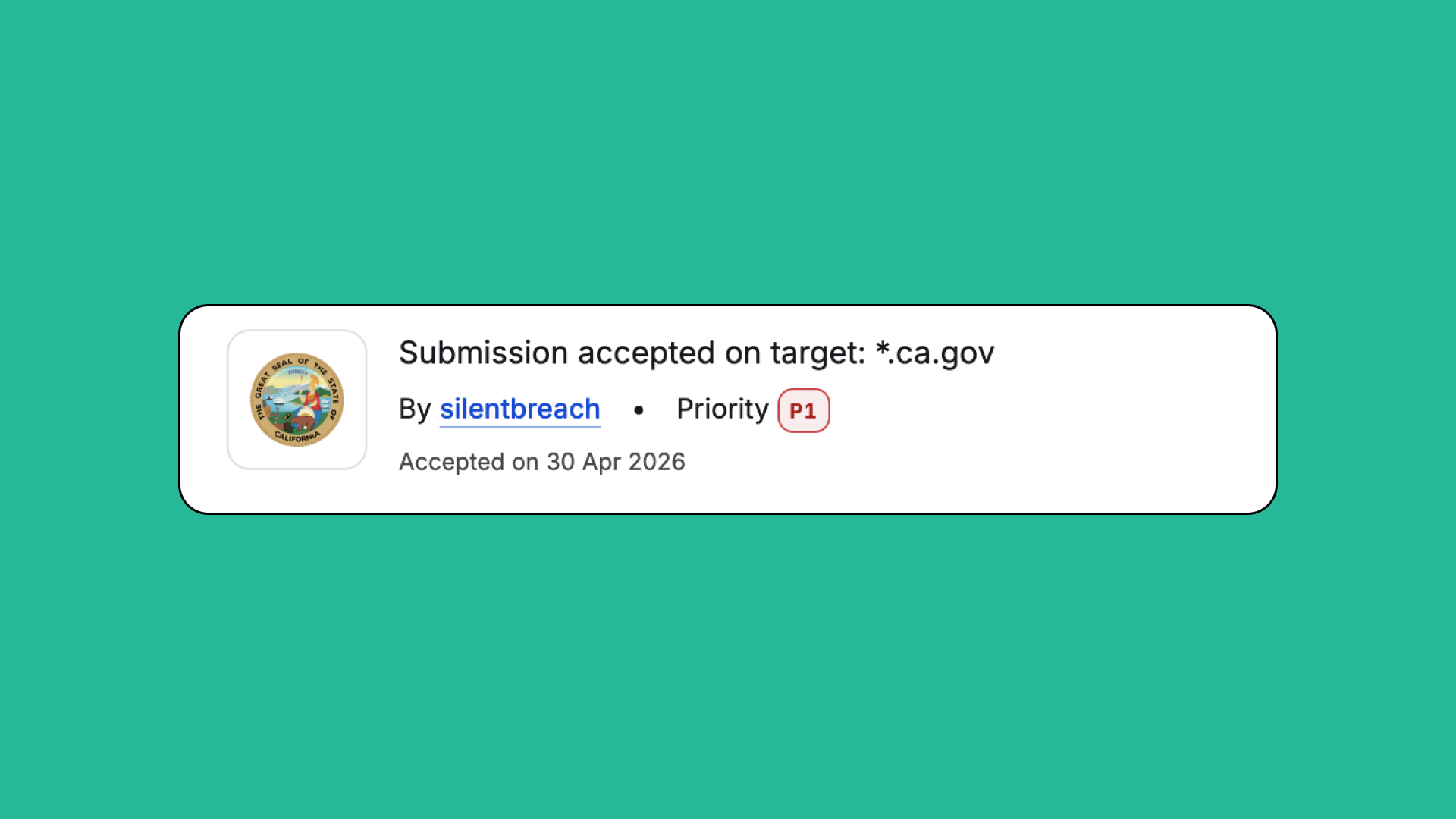
In May 2026, Silent Breach identified a critical zero-day vulnerability during authorized testing under Unilever's Vulnerability Disclosure Program that enabled unrestricted administrative access to a cloud-hosted factory management and employee communication platform used across Unilever's operations. The issue was reported responsibly through Unilever's VDP on Bugcrowd and was accepted and rated Critical.
At the time of discovery, the underlying access control weakness allowed an attacker to operate with full administrative privileges across the platform, including the ability to read, create, edit, and publish content that reaches factory floors and employees directly. Given the scope and severity of what that access made possible, Silent Breach treated this finding with the highest priority and worked with Unilever's security team to ensure prompt remediation.
Discovery Context
The vulnerability was identified during a sanctioned security engagement conducted within the scope and safe harbor terms of Unilever's Bugcrowd Vulnerability Disclosure Program. All testing was performed in accordance with the program's rules of engagement.
The Internal portal platform is used to manage factory rules, safety documentation, internal forms and forums, employee scheduling, and organization-wide communications. Silent Breach's assessment found that administrative controls governing this platform were not adequately isolated from the broader environment, allowing an attacker to assume full administrative context over the system.
This Critical zero-day vulnerability can be independently verified on Unilever's public Bugcrowd CrowdStream, where the finding is listed as submitted by Silent Breach: https://bugcrowd.com/engagements/unilever-vdp/crowdstream
Impact Assessment
Administrative access to this platform is significant precisely because of how deeply it is woven into day-to-day factory operations and employee communication. Successful exploitation of this vulnerability would have enabled an attacker to:
- Access, create, edit, and publish official factory rules and PDF documentation distributed to factory employees, including the ability to alter existing policy without detection.
- Read sensitive employee PII/PLL data, including full names, home addresses, and employee signatures stored within internal forms and forums.
- Send mass communications to Unilever employees, or impersonate Unilever leadership, through the platform's built-in Action Tracker email functionality, opening the door to large-scale phishing or misinformation campaigns carried out under Unilever's own name.
- Modify chemical usage and PPE safety documentation used directly in factory operations, including handling procedures and protective equipment requirements tied to manufacturing.
- Access and manipulate internal databases underpinning operational, compliance, and employee records.
- Alter employee shift schedules and staffing data, with downstream risk to factory operations and staffing safety margins.
- Approve new administrators or escalate privileges for additional accounts, giving an attacker a persistent, self-renewing foothold inside the platform.
From a threat-modeling perspective, this represents a severe failure of trust boundaries within a system that sits at the intersection of physical safety, employee privacy, and corporate communications. Administrative control over safety and chemical handling documentation, in particular, elevates this beyond a typical data exposure issue; a malicious actor with this level of access could tamper with the documentation that governs how chemicals are handled and applied in manufacturing, introducing a credible risk to employee safety and, ultimately, consumer safety.
Combined with the ability to distribute mass communications under Unilever's identity and to manipulate the employee data and records stored on the platform, this finding presented a realistic path to sustained, large-scale compromise of both operational integrity and employee trust.
Root Cause Analysis (High-Level)
Without disclosing exploit mechanics, Silent Breach can confirm that the issue stemmed from a combination of:
- Insufficiently restricted administrative identity and access management (IAM) controls
- Lack of adequate boundary enforcement between externally reachable application components and privileged administrative functions
- Overprivileged account roles that granted platform-wide administrative capability well beyond what any single function required
These conditions reflect a broader pattern Silent Breach continues to observe across organizations that manage sensitive operational functions where administrative privilege, once obtained.
Responsible Disclosure and Remediation
Upon confirmation of impact, Silent Breach submitted a detailed report through Unilever's Bugcrowd Vulnerability Disclosure Program, including a full impact analysis and proof-of-concept evidence. The submission was reviewed, accepted, and rated Critical by Unilever's security team under the program's triage process.
Unilever's team remediated the underlying issue following the report. Silent Breach did not publicly disclose technical exploitation details, and all communication regarding this finding was coordinated exclusively through Unilever's official Bugcrowd program channel.
Closing Notes
This finding underscores the outsized risk that a single overprivileged administrative account can introduce when it sits at the center of a platform touching employee safety, personal data, and corporate communications simultaneously. Vulnerability classes like this one are rarely about a single flaw; they are about the cumulative privilege that accumulates around administrative access when trust boundaries aren't rigorously enforced across every function a platform performs.
Silent Breach will continue participating in coordinated disclosure programs like Unilever's Bugcrowd Vulnerability Disclosure Program, identifying critical-impact issues before they can be weaponized, and helping organizations understand how modern, deeply integrated operational platforms fail so those failures can be fixed before they become incidents.